
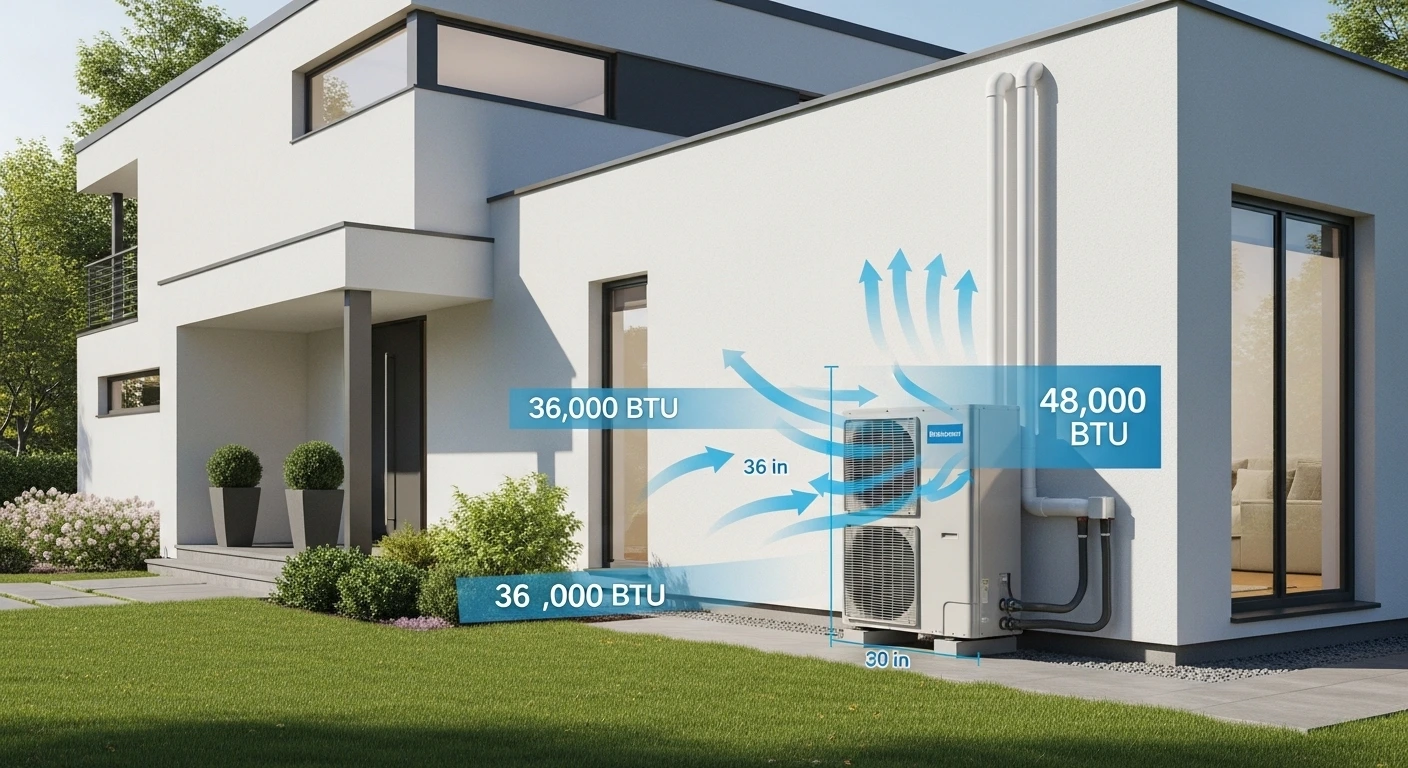
Choosing the right size heat pump for your home is one of the most important decisions you’ll make when upgrading or installing a heating and cooling system. A properly sized heat pump delivers maximum comfort, energy efficiency, and long-term savings, while an incorrectly sized unit can lead to high energy bills, uneven temperatures, and premature system failure.
This in-depth guide will explain how to choose the right size heat pump, what factors affect sizing, and how professionals determine the correct heat pump size for a home.
Why Heat Pump Size Matters More Than You Think
Many homeowners assume that a bigger heat pump means better performance. In reality, oversizing or undersizing a heat pump can create serious efficiency and comfort issues.
Problems with an Oversized Heat Pump
- Short cycling (turns on and off too frequently)
- Higher energy consumption
- Uneven indoor temperatures
- Increased wear and tear
Problems with an Undersized Heat Pump
- Struggles to maintain desired temperature
- Runs continuously
- Higher utility bills
- Reduced system lifespan
That’s why understanding how to size a heat pump properly is essential.
What Size Heat Pump Do I Need?
The answer depends on much more than your home’s square footage. While square footage is a starting point, it does not determine heat pump size on its own.
Key Factors That Affect Heat Pump Sizing
- Total square footage of the home
- Local climate and temperature extremes
- Insulation quality
- Ceiling height
- Number and size of windows
- Home orientation (sun exposure)
- Air leakage and duct condition
These factors work together to determine the heat pump capacity your home actually needs.
Heat Pump Sizing Guide: Understanding Capacity
Heat pump size is measured in BTUs (British Thermal Units) or tons.
| Home Size (Approx.) | Heat Pump Size |
|---|---|
| 1,000–1,500 sq ft | 2–3 tons |
| 1,500–2,000 sq ft | 3–4 tons |
| 2,000–2,500 sq ft | 4–5 tons |
How to Size a Heat Pump Properly (The Right Way)
The industry-approved method for determining heat pump capacity is a Manual J Load Calculation.
What Is a Manual J Load Calculation?
It’s a professional HVAC calculation that evaluates:
- Heat loss during winter
- Heat gain during summer
- Building materials and insulation levels
- Air infiltration
- Occupancy and internal heat sources
This calculation ensures the correct heat pump size for your home, not an educated guess.
Heat Pump Size Calculator: Are Online Tools Reliable?
Many homeowners use an online heat pump size calculator to get quick answers. While these tools can provide a general estimate, they often:
- Ignore insulation quality
- Don’t account for air leakage
- Overlook local climate variations
Determining Heat Pump Capacity by Climate Zone
Climate plays a major role when determining heat pump capacity.
Cold Climates
- Require higher BTU output
- Often benefit from cold-climate or dual-fuel heat pumps
Mild to Warm Climates
- Can use smaller systems efficiently
- Benefit from variable-speed heat pumps
Choosing the wrong size without factoring climate can lead to inefficient heating during peak winter months.
Signs Your Current Heat Pump Is the Wrong Size
If you already have a heat pump, these symptoms may indicate improper sizing:
- Rooms that never reach the set temperature
- High energy bills despite efficient equipment
- Constant cycling on and off
- Excess humidity indoors
If you notice these issues, a professional reassessment is recommended.
Professional vs DIY Heat Pump Sizing
DIY Estimates Are Good For:
- Early planning
- Budget discussions
- Rough system comparisons
Professional Sizing Is Essential For:
- Final installation
- Long-term efficiency
- Warranty protection
- Code compliance
A licensed HVAC professional ensures accurate heat pump sizing based on real data, not assumptions.
Final Thoughts: Choosing the Correct Heat Pump Size for Your Home
Choosing the right size heat pump isn’t about guessing or copying what your neighbor installed. It’s about precision, performance, and long-term savings.
Key Takeaways
- Bigger is not better
- Square footage alone is not enough
- Manual J calculations matter
- Proper sizing improves comfort and efficiency
- Professional evaluation delivers the best results
If you want a heat pump that performs efficiently year-round, investing time in determining the correct heat pump capacity is one of the smartest decisions you can make.