
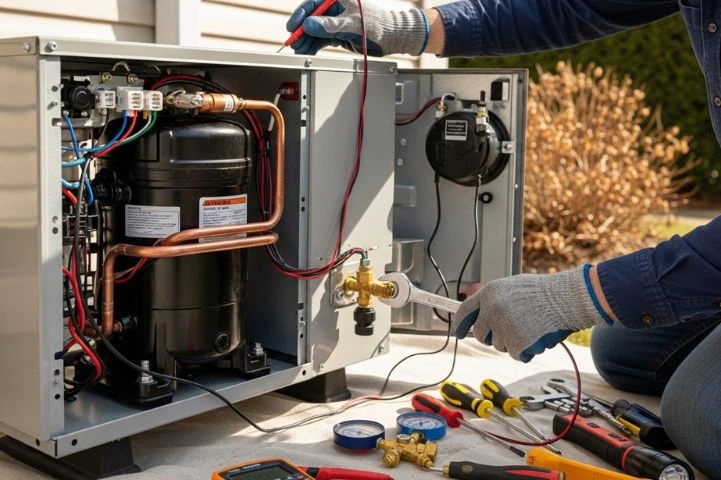
A heat pump compressor is the heart of your system, responsible for circulating refrigerant between the indoor and outdoor units. When your compressor fails or begins to malfunction, your home’s heating and cooling efficiency can drop significantly.
Common symptoms of a failing compressor include unusual noises, decreased heating or cooling performance, and tripped circuit breakers. Understanding these early warning signs can prevent costly damage to your HVAC system.
Common Causes of Heat Pump Compressor Failure
Several factors can cause a heat pump compressor to fail. Identifying the root cause is essential before considering repair. Common reasons include:
- Electrical issues: Overloaded circuits or blown fuses can prevent the compressor from functioning.
- Refrigerant problems: Low refrigerant levels or leaks can strain the compressor.
- Mechanical wear and tear: Over time, internal components can degrade.
- Lack of maintenance: Dirty coils, filters, or blocked airflow can lead to overheating.
Signs Your Heat Pump Compressor Needs Attention
Before deciding on repair, it’s important to recognize the warning signs:
- No Cooling or Heating: If your home isn’t reaching the set temperature, your compressor might be failing.
- Strange Noises: Clicking, humming, or buzzing noises often indicate electrical or mechanical problems.
- Frequent Breaker Trips: Repeated trips of your circuit breaker can signal a short in the compressor.
- Reduced Airflow: Even with a functional fan, low airflow may point to compressor inefficiency.
Can a Heat Pump Compressor Be Repaired?
The short answer is sometimes—but not always. Whether a compressor can be repaired depends on the type of failure:
- Electrical Failures: Replacing contactors, capacitors, or relays can restore function if the motor windings are intact.
- Mechanical Damage: Internal damage to pistons or valves usually requires full replacement.
- Burned-Out Motor: A burned-out compressor motor is rarely repairable and often requires a new unit.
It’s essential to have a licensed HVAC technician diagnose the issue. They will test the compressor, check the refrigerant levels, and inspect electrical connections to determine if repair is feasible.
Repair vs Replacement: What’s the Best Choice?
Deciding between repair and replacement depends on several factors:
- Age of the Heat Pump: Units older than 10–15 years may benefit more from replacement.
- Cost Comparison: Compressor repair can be expensive, sometimes reaching 50–70% of a new unit’s cost.
- Efficiency Considerations: New compressors are more energy-efficient, which can lower long-term utility bills.
- Warranty Status: Some repairs may be covered under warranty, making repair a more attractive option.
In many cases, replacing the compressor—or the entire heat pump system—can be more cost-effective in the long run.
DIY vs Professional Repair
Attempting to repair a heat pump compressor yourself is not recommended. Compressors operate under high pressure and require specialized tools and knowledge. Improper handling can lead to:
- Refrigerant leaks
- Electrical hazards
- Further damage to the system
Always hire a licensed HVAC technician with experience in heat pump compressor repair. They can ensure safe, effective, and lasting solutions.
How to Prevent Heat Pump Compressor Failures
Preventative maintenance can extend your compressor’s lifespan and reduce the likelihood of costly repairs. Key strategies include:
- Regular inspections: Have a technician inspect your heat pump annually.
- Clean filters and coils: Prevent airflow blockages that overheat the compressor.
- Monitor refrigerant levels: Low refrigerant can damage the compressor over time.
- Avoid overuse: Proper thermostat settings reduce unnecessary strain on your system.
Conclusion: Making the Right Decision
A heat pump compressor can sometimes be repaired, but the feasibility depends on the type and extent of the damage. Electrical issues are often fixable, while mechanical failures usually require replacement.
When facing a failing compressor, evaluate your system’s age, efficiency, repair costs, and long-term needs. Consulting with a licensed HVAC professional ensures you make an informed decision that protects your home’s comfort and your budget.