
Refrigerant leaks in heat pumps are one of the most common and most damaging HVAC problems homeowners face. When a heat pump is losing refrigerant, it can no longer transfer heat efficiently, leading to poor comfort, higher energy bills, and potential system failure.
In this in-depth guide, we’ll cover heat pump refrigerant leak signs, the causes of refrigerant leaks, and how to fix refrigerant leaks in heat pumps all written with semantic SEO best practices to help this content outperform competitors.
What Is Refrigerant and Why It Matters in a Heat Pump
Refrigerant is a specialized chemical that absorbs and releases heat as it circulates through your heat pump system. Unlike fuel, refrigerant is not supposed to be consumed or run out.
If your heat pump is leaking refrigerant, it means there is damage somewhere in the closed loop — and performance will drop quickly.
Heat Pump Refrigerant Leak Signs You Should Never Ignore
Identifying low refrigerant in heat pump symptoms early can prevent costly repairs. Below are the most common warning signs.
1. Heat Pump Not Cooling Properly
If your home feels warm even when cooling mode is on, low refrigerant may be preventing proper heat absorption. This is often the first sign of refrigerant leaks in heat pumps.
2. Heat Pump Not Heating Properly
In winter, refrigerant leaks reduce the system’s ability to extract heat from outdoor air, resulting in lukewarm or cold airflow.
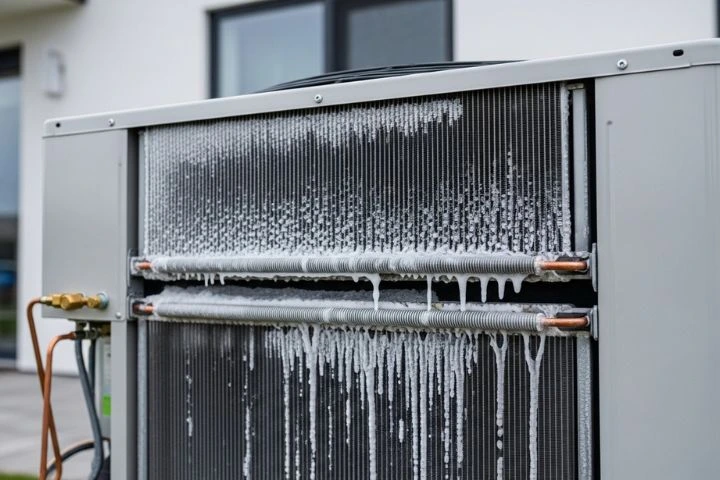
3. Frozen Heat Pump Coil
A frozen heat pump coil is a classic indicator of low refrigerant. When pressure drops, coils become excessively cold, causing moisture to freeze.
4. Ice Buildup on Heat Pump
Ice forming on the outdoor unit or refrigerant lines is a major red flag. Ice buildup on a heat pump almost always points to airflow issues or refrigerant loss.
5. Hissing Sound from Heat Pump
A hissing or bubbling sound from the heat pump may indicate refrigerant escaping through small cracks or pinhole leaks.
6. Rising Energy Bills
A system with low refrigerant must work harder to maintain temperature, causing energy usage and bills to spike.
7. Heat Pump Losing Refrigerant Over Time
If your technician keeps “topping off” refrigerant, the system is leaking. Refrigerant loss is never normal.
Causes of Refrigerant Leaks in Heat Pumps
Understanding the causes of refrigerant leaks helps prevent future problems.
• Corrosion of Copper Lines
Over time, chemical reactions can corrode refrigerant lines, leading to tiny leaks.
• Factory or Installation Defects
Poor brazing or weak joints during installation are a common source of heat pump leaking refrigerant.
• Vibration and Wear
Constant vibration can loosen fittings and create micro-fractures in the refrigerant loop.
• Physical Damage
Outdoor units exposed to lawn equipment, debris, or animals are especially vulnerable.
How to Fix a Refrigerant Leak in a Heat Pump
If you suspect a leak, do not attempt DIY fixes. Refrigerant handling requires EPA-certified equipment and expertise.
Step 1: Professional Leak Detection
HVAC technicians use electronic detectors, UV dyes, or pressure testing to locate leaks accurately.
Step 2: Repair or Replace the Damaged Component
Depending on severity, the technician may:
- Seal small leaks
- Replace refrigerant lines
- Install a new evaporator or condenser coil
Step 3: Recharge with the Correct Refrigerant
After repairs, the system is vacuumed and recharged to manufacturer specifications.
Step 4: System Performance Testing
Airflow, pressure, and temperature split tests ensure the heat pump is running efficiently again.
Is It Safe to Run a Heat Pump with Low Refrigerant?
No. Operating a heat pump with low refrigerant can:
- Damage the compressor
- Cause repeated freezing
- Shorten system lifespan
- Void manufacturer warranties
If you notice heat pump refrigerant leak signs, shut the system off and call a professional.
How to Prevent Refrigerant Leaks in the Future
- Schedule annual HVAC maintenance
- Keep outdoor units clear of debris
- Fix ice buildup immediately
- Avoid repeated refrigerant “refills” without leak repair
Preventive care is far cheaper than compressor replacement.
When to Call an HVAC Professional
Contact a licensed technician immediately if you notice:
- A frozen heat pump coil
- Hissing sounds from the heat pump
- Heat pump not cooling properly
- Heat pump not heating properly
- Visible ice or refrigerant oil residue
Early action can save thousands in repair or replacement costs.
Final Thoughts: Don’t Ignore Refrigerant Leaks in Heat Pumps
Refrigerant leaks in heat pumps are serious but manageable when caught early. Recognizing the symptoms, understanding the causes, and knowing how to fix refrigerant leaks in a heat pump empowers homeowners to protect comfort, efficiency, and long-term system health.